NYC’s Affordable Housing State by Borough - 2026 Update
New York City's housing lottery keeps adding new "affordable" rentals in every borough, but in 2026 that word covers a very wide range of realities. Some buildings offer studios in the $500s to households earning under $40,000, while others market two-bedrooms around $4,500 to families with incomes well over $200,000. Most new lotteries land between 40% and 130% of Area Median Income (AMI), with a smaller group of projects serving extremely low-income renters at 30% AMI.
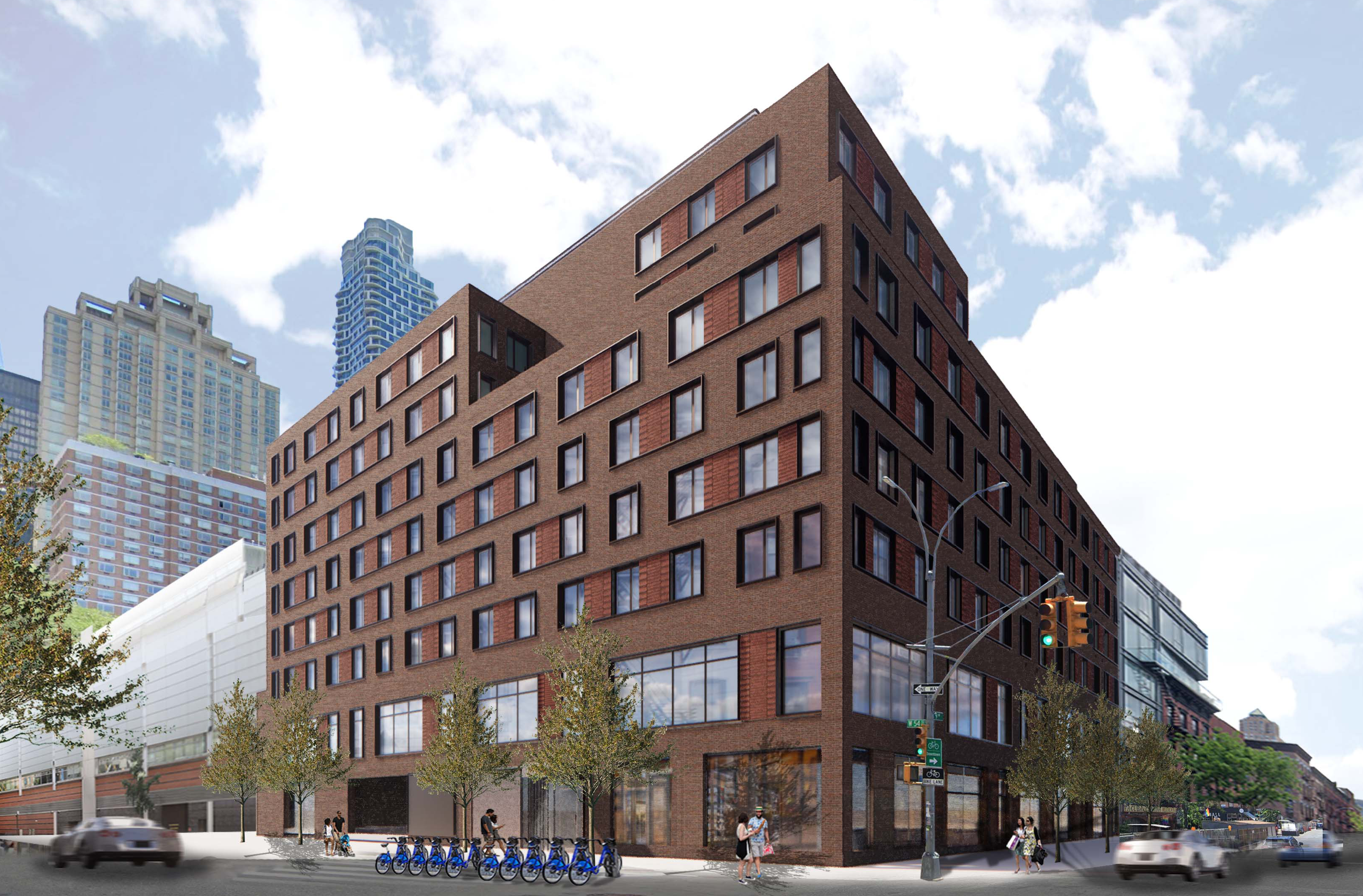 |
| The Lirio at 364 West 64th Street - Rendering Courtesy of Housing Works |
As of mid-September 2026, there were around a dozen rental lotteries open across the city, with rents roughly between $1,700 and $3,600 and eligible incomes from the mid-$30,000s into the high-$200,000s depending on unit size and AMI band. Below is a shorter borough overview geared to people who want clear examples more than policy jargon.
To find and apply for affordable apartments visit NYC Housing Connect.
AMI and Income Limits in Plain English
Every lottery ad still uses AMI percentages, but the basic idea is simple. HUD looks at typical incomes across the New York metro region and sets rent and income bands as a share of that number. For 2026, HPD's own chart puts 100% AMI at $169,600 for a family of four and $118,800 for a single person.
That means, roughly:
At 30% AMI, a four-person household can earn up to about $50,880.
At 80% AMI, the same household can earn up to about $135,680.
At 130% AMI, it can earn up to about $220,480.
Housing is considered affordable when the rent is about one-third or less of household income. So a one-bedroom at 60% AMI might rent around $1,800, while a one-bedroom at 130% AMI can sit closer to $3,900. The important takeaway is that "middle-income" lottery units are still officially affordable even when they require six-figure salaries.
Manhattan: Mostly Middle-Income, With Some Deeply Affordable Units
In Manhattan, most recent lotteries target moderate and middle-income renters, but a few buildings mix deeply affordable units with higher-band apartments in the same property. The Lirio in Hell's Kitchen is the clearest example for 2026.
The Lirio, at 364 West 54th Street, offers 112 affordable homes, including supportive housing for formerly homeless New Yorkers and lottery units for households earning between 30% and 120% of AMI. The current lottery covers 44 apartments with rents from about $863 up to the $3,000s and eligible incomes from around $35,315 to $219,840. A lower-band two-bedroom can land under $1,000, but higher-band units sit in the $3,000 range for households in the $150,000 to $220,000 range.
Other 2026 Manhattan lotteries, like 125 Chrystie Street and several Midtown buildings, list studios and one-bedrooms at 60% to 100% AMI with rents roughly between $1,500 and $2,700, again reflecting a focus on moderate and middle incomes. In short, Manhattan still has a few deeply affordable projects, but most new lottery units are aimed at renters who already earn relatively high incomes.
Brooklyn: Cheapest Units and Luxury-Adjacent "Affordable" Apartments
Brooklyn continues to show the widest spread of affordability, with some of the city's lowest lottery rents and some of its highest. Columbia Commons I in Red Hook covers 40%, 60%, and 100% AMI in a single building, with studios from $777 and two-bedrooms from $1,165, climbing into the mid-$2,000s at the top band.
On the high side, SOLACE at 74 St. Marks Place in Park Slope shows how far one lottery can stretch. The same building spans 40% to 130% AMI, so it has studios from $992 for households earning as little as $38,949 right alongside its 130% AMI units, which include studios around $3,543, one-bedrooms near $3,784, and two-bedrooms as high as $4,518 for households earning up to about $238,160. It's a good reminder that a single "affordable" building can be genuinely affordable and luxury-adjacent at the same time, depending which unit you happen to win.
Central Brooklyn towers in Crown Heights and Downtown also advertise one- and two-bedrooms at 80% to 130% AMI, with typical rents between about $2,000 and $3,700. Taken together, Brooklyn's 2026 lotteries include truly low-rent apartments in outer neighborhoods and high-priced "affordable" units in prime areas that look very similar to standard luxury rentals.
Queens: $545 Sunnyside Studios and Rockaway Family Units
Queens has some of the most striking lottery examples this year. The Barnett in Sunnyside and Edgemere Commons in Far Rockaway are the two buildings most worth highlighting.
The Barnett at 50-25 Barnett Avenue offers apartments at 30%, 50%, and 80% AMI. At 30% AMI, studios start at $545 a month for households earning roughly $22,000 to $39,000, and one-bedrooms rent for $693 for incomes in the high-$20,000s to low-$40,000s. Higher bands in the same building move up to the $2,200 to $3,000 range, serving households with incomes up to about $160,000.
Edgemere Commons B1 in Far Rockaway offers studios and family-sized units at 30% to 80% AMI, with rents from about $544 for a 30% AMI studio up to roughly $2,949 for an 80% AMI three-bedroom. Incomes for those units run from the low-$20,000s up into the $160,000s. These two buildings show Queens' range: some very low-rent apartments near transit, mixed-income complexes in the Rockaways, and higher-band towers elsewhere in the borough.
The Bronx: Strong Low-Income Options Plus New Middle-Income Towers
The Bronx has become one of the most active lottery boroughs, and a significant share of its units serve low-income households. Blondell Commons in Westchester Square is a key 2026 example.
Blondell Commons offers 126 units at 30%, 50%, and 70% AMI, with one-, two-, and three-bedrooms. At 30% AMI, one-bedrooms rent for $732, two-bedrooms for $863, and three-bedrooms for $981, serving households with incomes roughly between $29,000 and $63,000. At 70% AMI, three-bedrooms can reach $2,745 for households earning up to about $147,000.
On the middle-income side, One River Park at 355 Exterior Street in Mott Haven, a new two-tower complex, offers 227 rent-stabilized apartments at 70% to 130% AMI. Rents start around $1,936 for one-bedrooms and go up to about $2,850 for two-bedrooms, targeting households with incomes from roughly $74,000 to $238,000. Several smaller Bronx buildings also list 80% AMI units with two-bedrooms around $2,500 to $2,700 for incomes in the $90,000 to $146,000 range. Overall, the Bronx still offers some of the lowest lottery rents in the city, especially at 30% and 50% AMI, while also adding new middle-income towers.
Staten Island: Rare Lotteries and Mixed-Income Buildings
Staten Island continues to have the fewest lottery opportunities of any borough. When Staten Island projects do reach the lottery stage, they usually offer a small number of units at a mix of low and middle-income bands.
Lighthouse Point in St. George remains the best-known example. Its recent lottery included about 30 apartments at 40%, 60%, and 130% AMI, with studios around $903 at the lowest band and two-bedrooms near $4,001 at the highest band, serving households earning roughly $33,000 to about $218,000. New plans at 198-208 Richmond Terrace, a 14-story, 117-unit tower, include a modest share of permanently affordable apartments expected to target moderate and middle-income renters once they reach Housing Connect.
For renters, Staten Island's main story is scarcity: the borough does have mixed-income buildings with real low-rent studios and higher-band two-bedrooms, but there are far fewer lottery chances compared with the rest of the city.
What "Affordable" Looks Like Across the Boroughs
Across all five boroughs, 2026 Housing Connect listings still spell out income and household-size limits for each unit, and most new lotteries fall between 40% and 130% AMI. Citywide, summer 2026 lotteries have ranged from the mid-$400s up to the mid-$4,000s, with median rents landing around $1,600 to $2,100 depending on the month.
In practice:
Low-band lotteries (30% to 60% AMI) deliver sub-$1,800 rents, with rare but headline-worthy studios in the $500s and family-sized units under $1,000 in buildings like The Barnett, Edgemere Commons, and Blondell Commons.
Middle-income lotteries (100% to 130% AMI) typically ask between about $2,000 and more than $3,600 for one- and two-bedrooms in new towers in Manhattan, Brooklyn, and the Bronx.
Put simply, affordable housing in NYC still means very different things from borough to borough. Manhattan's lotteries tilt toward higher incomes and higher rents. Brooklyn spans the full spectrum, from outer-borough bargains to buildings like SOLACE where the same lottery can hand one winner a $992 studio and another a $4,518 two-bedroom. Queens pairs $545 Sunnyside studios with larger Rockaway apartments for six-figure families. The Bronx offers some of the lowest rents at 30% and 50% AMI plus new middle-income towers. And Staten Island has a small number of mixed-tier buildings but very few lottery listings overall.


