Watchtower to Waterfront Living: A Brooklyn Compound Reborn
There are certain properties in New York that quietly shape entire neighborhoods. And then there are the former Watchtower buildings in Brooklyn, which didn’t just shape Brooklyn Heights and DUMBO, they defined them for more than a century.
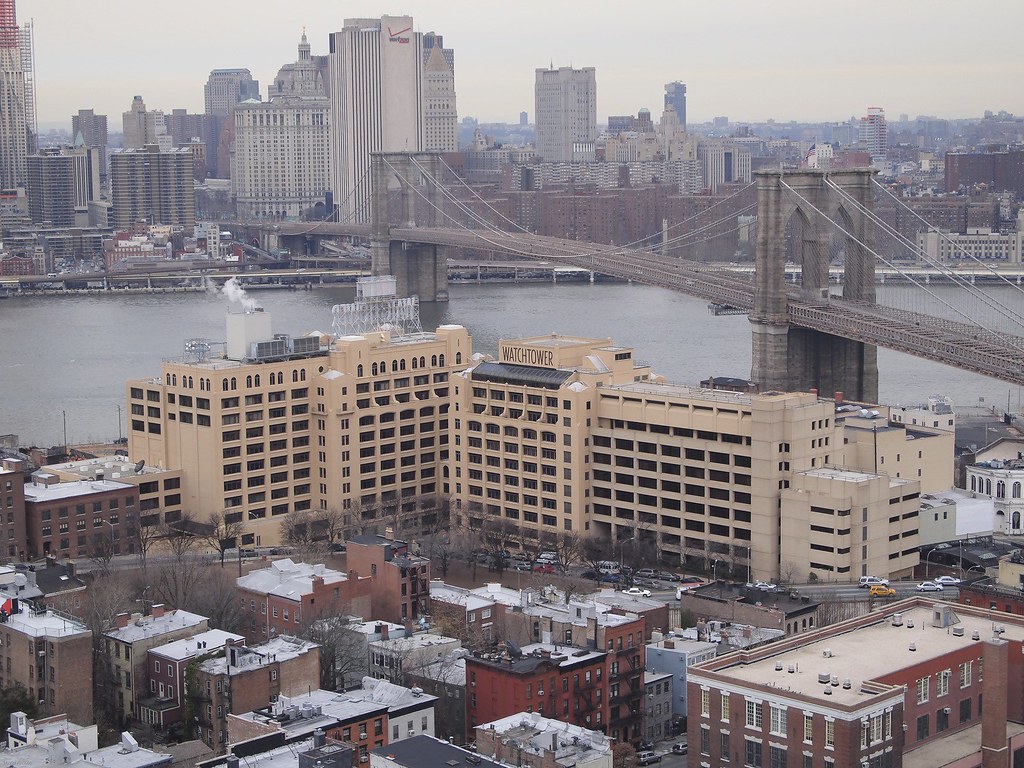
Now, after years of gradual sales and piecemeal redevelopment, we’re watching something bigger happen. Many of these buildings are being repositioned again, and this time the focus is increasingly on housing. If you care about where and how New York grows, this is one of the most important stories to understand right now.
A Hidden Real Estate Empire Along the Waterfront
Long before DUMBO was filled with tech offices and waterfront condos, the Watch Tower Bible and Tract Society quietly assembled one of the most valuable portfolios in New York.
Starting in the early 1900s, they bought up buildings across Brooklyn Heights and DUMBO, turning everything from brownstones to industrial warehouses into a fully integrated campus. Offices, printing plants, dormitories, even hotels for volunteers. At its peak, the portfolio spanned dozens of properties and some of the best views in the city.
For decades, most New Yorkers barely thought about it. The buildings were occupied, self-contained, and off the market.
Then everything changed.
The Exit That Unlocked an Entire Neighborhood
When the organization decided to relocate its headquarters to upstate New York in the 2010s, it triggered one of the most significant real estate sell-offs Brooklyn has ever seen.
We’re not talking about a single tower. We’re talking about entire blocks, millions of square feet, and sites that simply do not come available under normal circumstances.
Developers moved quickly. Groups like CIM Group and Kushner Companies acquired major pieces of the portfolio, often in headline-making deals worth hundreds of millions of dollars.
At the time, the vision was mixed. Some buildings would become offices. Others would become luxury condos. A few would become something else entirely.
A decade later, we’re starting to see how that vision is evolving.
From Printing Presses to Penthouses
One of the earliest clues came with One Brooklyn Bridge Park.
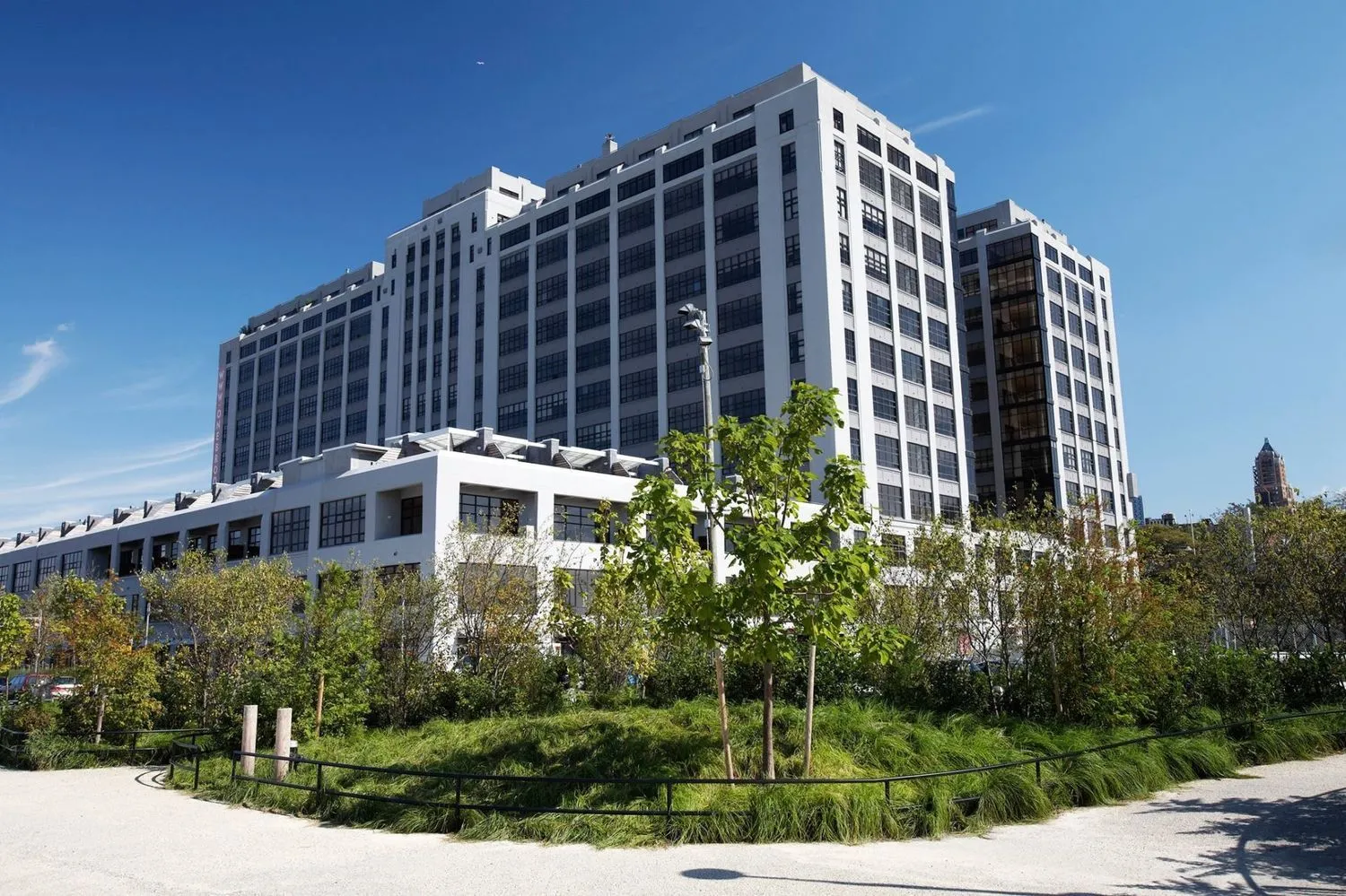 |
| One Brooklyn Bridge Park |
This massive former shipping facility, once used to distribute religious literature worldwide, was converted into a luxury condo building right on the waterfront. It helped prove something important. Buyers were more than willing to pay top dollar for these converted industrial spaces, especially with park and skyline views.
That playbook has been repeated again and again.
Buildings like The Standish and the former dormitories along Columbia Heights have been transformed into boutique luxury residences. These aren’t typical apartment conversions. They tend to be large, character-filled units in historic structures that would be nearly impossible to replicate today.
And then there’s scale.
The Mega Projects That Are Reshaping DUMBO
If you want to understand how dramatically this portfolio has changed the neighborhood, look at Front & York.
What used to be a simple parking lot tied to Watchtower operations is now one of the largest residential developments in DUMBO. Hundreds of new units, full-service amenities, and a completely different level of density for the area.
This is the kind of project that only happens when a single owner controls an entire block and decides to sell.
It is also a preview of what is still to come.
A Different Kind of Conversion at 90 Sands
Not every building followed the luxury route, and that’s an important part of this story.
90 Sands Street may be one of the most meaningful transformations in the entire portfolio. Originally a residence for volunteers, it has been converted into nearly 500 units of supportive and affordable housing.
 |
| 90 Sands Street |
In a neighborhood where prices have skyrocketed, this project stands out. It shows that these large, institutional buildings can also be part of the solution to the city’s housing challenges, not just another source of high-end inventory.
The Next Chapter: The Watchtower Headquarters Itself
Now we get to the most significant piece still in play.
The former headquarters complex along Columbia Heights, the one with the iconic Watchtower sign overlooking the East River, is being reconsidered yet again. After an attempt to reposition it as a creative office campus stalled, the current owner is moving toward a large-scale residential conversion.
We’re talking about hundreds of apartments, including a meaningful affordable component, in one of the most desirable locations in Brooklyn.
If approved, this would mark a full-circle moment. The most symbolic property in the entire portfolio would shift from religious headquarters to housing, reflecting exactly where the New York market is today.
Why This Matters More Than It Seems
It’s easy to look at these projects individually. A condo here, a rental building there. But taken together, this is something much bigger.
The Watchtower sell-off essentially released a once-in-a-generation supply of large development sites into two of Brooklyn’s most constrained neighborhoods. That has allowed for:
Large-scale residential projects that would otherwise be impossible
A mix of luxury, market-rate, and affordable housing
The transformation of DUMBO into both a residential and office hub
It has also raised the usual New York questions. Who gets to live here? How much density is too much? And how do you balance historic character with modern needs?
Those questions are still being answered.
Where This Is Headed
If you step back, the trend is pretty clear. Office plans are being reconsidered. Residential demand remains strong. And these buildings, with their size, structure, and location, are uniquely suited for conversion.
In other words, we are probably not done yet.
What started as a religious campus became a wave of high-profile real estate deals. Now it is turning into something else again. A major source of new housing in neighborhoods where adding supply is incredibly difficult.
And in a city that is constantly trying to figure out how to grow without losing what makes it special, that makes these former Watchtower buildings some of the most important real estate in New York right now.


