Buildings That Hang in Midair - Why NYC Developers Love Cantilevers
Walk around Manhattan right now and you'll start noticing something unusual once you look up. Some buildings don't quite sit on the ground the way you expect them to. Upper floors jut out over neighboring properties, entire sections appear to float, and in some cases the building actually gets wider as it rises.
At first glance, it can feel like a structural gamble. In reality, it is one of the most calculated and intentional moves in modern real estate development.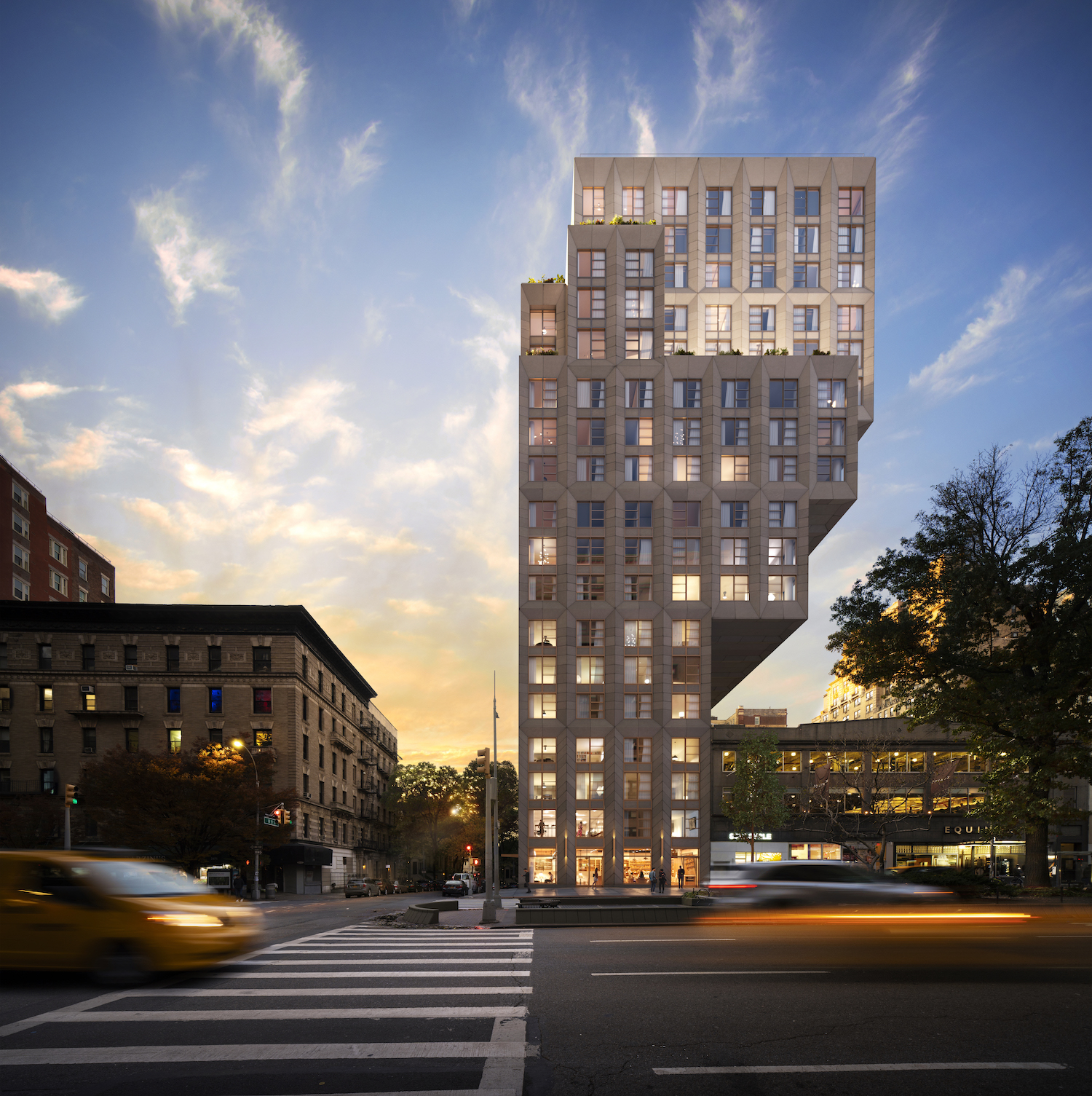 |
| Rendering of The Westly at 251 West 91st Street |
These are cantilevered buildings. And they are quietly reshaping how developers build, sell, and profit in a city where land is scarce and every square foot matters.
What a Cantilever Actually Is
A cantilever is simply a portion of a building that extends outward without columns directly underneath it. The easiest way to picture it is a diving board, anchored at one end and unsupported at the other, with the strength coming from how it is tied back into the structure behind it.
In a place like New York, that flexibility is incredibly valuable. Zoning often limits how tall a building can go, but it doesn't always prevent creative use of space within a given envelope. That's where cantilevers come in. And in a market where developers are assembling small, irregular lots and buying air rights from neighbors who won't sell their property outright, the cantilever has gone from architectural novelty to practical necessity.
The Buildings Worth Knowing
56 Leonard Street, TriBeCa: The One That Started the Conversation
If you've ever seen the "Jenga Tower" (officially 56 Leonard, designed by Swiss firm Herzog & de Meuron), you already know what a cantilever looks like at its most theatrical.
No two consecutive floor plates are the same. The stacked, shifting forms cantilever up to 35 feet outward. Some floors push east, some push west, each one creating a different footprint than the floor below it. The structural challenge was enormous. The deeper cantilevered floors required additional stabilization that isn't visible from the street but is doing serious work inside the building.
The result is a tower that reads as a sculpture from a distance and delivers genuinely unique layouts up close. If you're in a unit on one of the deeper cantilevered floors, you have outdoor terrace space that simply doesn't exist in a conventional tower. That space is part of why units here trade at a premium.
Central Park Tower, 217 West 57th Street: The Cantilever That Was a Business Decision
Central Park Tower is the tallest residential building in the world (1,550 feet, 98 stories) and its cantilever exists entirely because of a rival building going up next door.
Here's the story: as Central Park Tower was being designed, Vornado's 220 Central Park South was under construction one block over. Without a design change, 220 CPS would have blocked views of Central Park from the lower portion of Extell's tower, potentially for the first few hundred feet of what were supposed to be some of the most valuable floors in the building.
The solution was a 28-foot cantilever on the east side of the tower, starting about 290 feet up, right at the height where 220 CPS would have become the problem. That overhang pushes the affected floors far enough east to clear the obstruction and restore the Central Park sightlines that justify the price tags in this building.
The complicating factor: the tower couldn't simply expand at ground level because the Art Students League building at 215 West 57th is a protected NYC landmark. It couldn't be modified, couldn't be demolished, couldn't be built on. The cantilever quite literally steps over it.
This is exactly how it works in the real world. The cantilever wasn't an aesthetic choice. It was the only move on the board.
251 West 91st Street (The Westly), Upper West Side: The Biggest Residential Cantilever in Manhattan
If you want a UWS example (the original version of this post vaguely referenced it without naming it), this is it.
The Westly, designed by ODA Architecture and developed by Adam America Real Estate, holds the distinction of being Manhattan's largest residential cantilever. The building pushes dramatically outward on the upper floors, creating floor plates at the top of the building that are significantly larger than what the ground-level footprint alone would allow.
The practical payoff for buyers: larger units and better Hudson River and skyline exposure on the floors that cantilever out. Homes range from roughly 1,250 to 3,500 square feet with two- to five-bedroom configurations. Layouts that wouldn't exist in the same form without the overhang below them.
252 East 57th Street, Midtown East: The Subtle One
This one is less obviously dramatic than 56 Leonard but equally interesting once you understand what's happening.
The SOM-designed tower has a curved glass facade that actually gets wider as it rises: the balconies start three feet deep at the base and cantilever out to eight feet toward the top. So the higher you go, the more outdoor space you have. A top-floor residence here has nearly three times the terrace depth of the lower floors.
There's also something worth knowing about why this building exists at all: it was developed as a public-private partnership with the Educational Construction Fund, meaning it sits on top of two public schools. The tower's footprint was shaped by what was below it, and the upper-floor cantilevers were part of how the developer maximized the residential square footage above a constrained base.
The Business Logic
From a pricing standpoint, the math behind cantilevers is pretty simple. Not all square footage is equal. Higher floors come with better light, better views, less noise, and higher resale value. If a developer can make the upper floors larger than the lower ones (which is what a cantilever does), they are concentrating their most valuable product exactly where it commands the highest price per square foot.
And in a crowded luxury market, the visual identity matters too. A building that looks like every other glass box is a harder sell than one with a bold, recognizable form. 56 Leonard gets photographed constantly. Central Park Tower is instantly recognizable on the skyline. The Westly stands out on the Upper West Side in a way that a conventional tower would not. That distinctiveness is worth something, to developers at launch and to owners at resale.
Is It Actually Safe?
The question everyone asks, and the answer is yes, but not because the laws of physics don't apply.
A cantilever doesn't float. It counterbalances. The portion of the structure that extends outward is supported by a much larger system behind it. Reinforced concrete and steel cores anchor the building, while the section of the floor that extends back into the structure acts as a counterweight. Transfer beams distribute the load. What you see projecting outward is only half of the system. The other half is embedded in the building and doing just as much work in the opposite direction.
Modern engineering tools allow structural engineers to simulate exactly how a building will perform under load, wind, and movement before a single column goes in the ground. High-strength concrete and post-tensioned slabs make longer spans more efficient and control deflection. At 56 Leonard, where some cantilevers push 35 feet out, the structural solution inside the building is significantly more complex than anything visible from the street.
The short version: every cantilevered building in New York goes through the same DOB review as any other high-rise. The drama is in the design. The engineering underneath it is methodical and heavily scrutinized.
Why You'll Keep Seeing More of Them
Available development sites in Manhattan are getting smaller and more complicated. Developers are assembling irregular lots, working around landmarks they can't touch, buying air rights from neighbors who want the money but not the disruption of a sale. In that environment, a cantilever isn't a stylistic choice, it's often the only way to build the building the numbers require.
When you see a floor plate jutting out over a neighbor's roof, there is almost always a specific reason for it. A blocked view that needed clearing. A landmark that couldn't be built on. An air rights acquisition that had to be used somewhere. A zoning envelope that rewarded pushing outward rather than upward.
Next time you're walking around and you spot one, look up long enough to ask why it's there. The answer is almost always more interesting than the architecture.


