Inside the Deal That’s Finally Moving 2 World Trade Center Forward
When news broke that American Express is committing to roughly 2 million square feet at 2 World Trade Center, most of the headlines focused on the obvious angle: the final major piece of the World Trade Center puzzle may finally be moving forward.
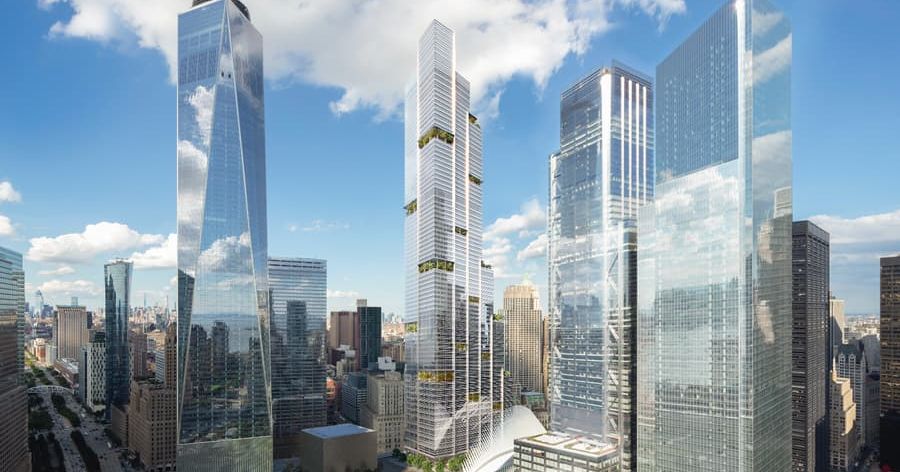
But the more interesting story isn’t just that a big company signed on. It’s how the deal is structured.
The land under the entire World Trade Center complex is owned by the Port Authority of New York and New Jersey. For decades, Silverstein Properties has controlled development parcels there through long-term ground leases. That’s how Towers 3 and 4 were built, and it’s how 2 WTC has been sitting in a holding pattern waiting for the right anchor tenant.
This time, though, the setup is a little different.
Rather than American Express simply signing a giant office lease and paying rent to Silverstein as a traditional landlord, the structure appears to put AmEx directly into the ground-lease position with the Port Authority. In practical terms, that means AmEx will control the leasehold interest in the site itself and will be the long-term economic owner of the building for the duration of that lease.
Silverstein is still very much involved. The firm remains the developer of the tower and the driving force behind getting the project built. But instead of holding the long-term leasehold and leasing space to AmEx, Silverstein is effectively handing over that primary position and shifting into a development role.
That distinction matters.
In a typical office tower, a tenant signs a lease, the landlord owns the building, and that’s that. Here, the ground landlord — the Port Authority — is directly negotiating and restructuring its lease because the incoming occupant isn’t just another tenant. It’s the entity that will control the entire building.
It’s a structure we’ve seen with other trophy headquarters projects in New York, where a blue-chip company wants long-term control, branding dominance, and financial upside that goes beyond writing a rent check. For the Port Authority, it locks in a creditworthy counterparty at the ground level. For American Express, it provides stability and control over a generational headquarters. For Silverstein, it finally unlocks the last major tower site at the rebuilt World Trade Center.
And in Lower Manhattan, that may be the biggest headline of all.
After years of redesigns, stalled concepts, and shifting anchor tenants, 2 World Trade Center isn’t just another leasing announcement. It’s a sign that the capital stack has finally aligned in a way that makes construction realistic. In this market, that’s no small feat.


