Across the Lake: Amazon’s Quiet Eastward Expansion
If you follow West Coast office markets the way some of us follow Manhattan condo inventory, you’ve probably noticed a clear theme in the Seattle area: Amazon is slowly trimming back in downtown Seattle while doubling down across the lake in Bellevue.
It’s not dramatic. It’s not a headline-grabbing HQ2 situation. It’s more of a steady, deliberate re-balancing.
Seattle: consolidating, not disappearing
In Seattle’s Denny Triangle and South Lake Union core, Amazon has been letting several leased buildings go rather than renewing. That includes mid-sized towers like 1915 Terry Avenue, known as “Kumo,” and Metropolitan Park North. The company has also vacated space at 2001 Eighth Avenue and 1800 Ninth Avenue as part of this pullback.

The pattern is pretty consistent. Amazon is shedding leased space, especially in buildings it doesn’t control long term, and relocating employees into offices it owns or has deeper commitments to. Seattle remains a major hub, but the growth energy is no longer concentrated exclusively there.
For landlords in downtown Seattle, this means more backfill work. Some space is already being re-tenanted by other firms, but often at softer rents and after downtime. For the city, it’s a reminder of how dependent the urban core became on one dominant tech tenant during the last expansion cycle.
Bellevue: building a second center of gravity
Across Lake Washington, the story feels very different.
In downtown Bellevue, Amazon has assembled a tight cluster of large, often brand-new towers. It has committed to the full West Main campus, taken major space in 555 Tower and The Artise, and opened additional buildings known as Sonic and Dynamo. It also owns the Bellevue 600 development site, where two substantial office towers are planned near light rail.
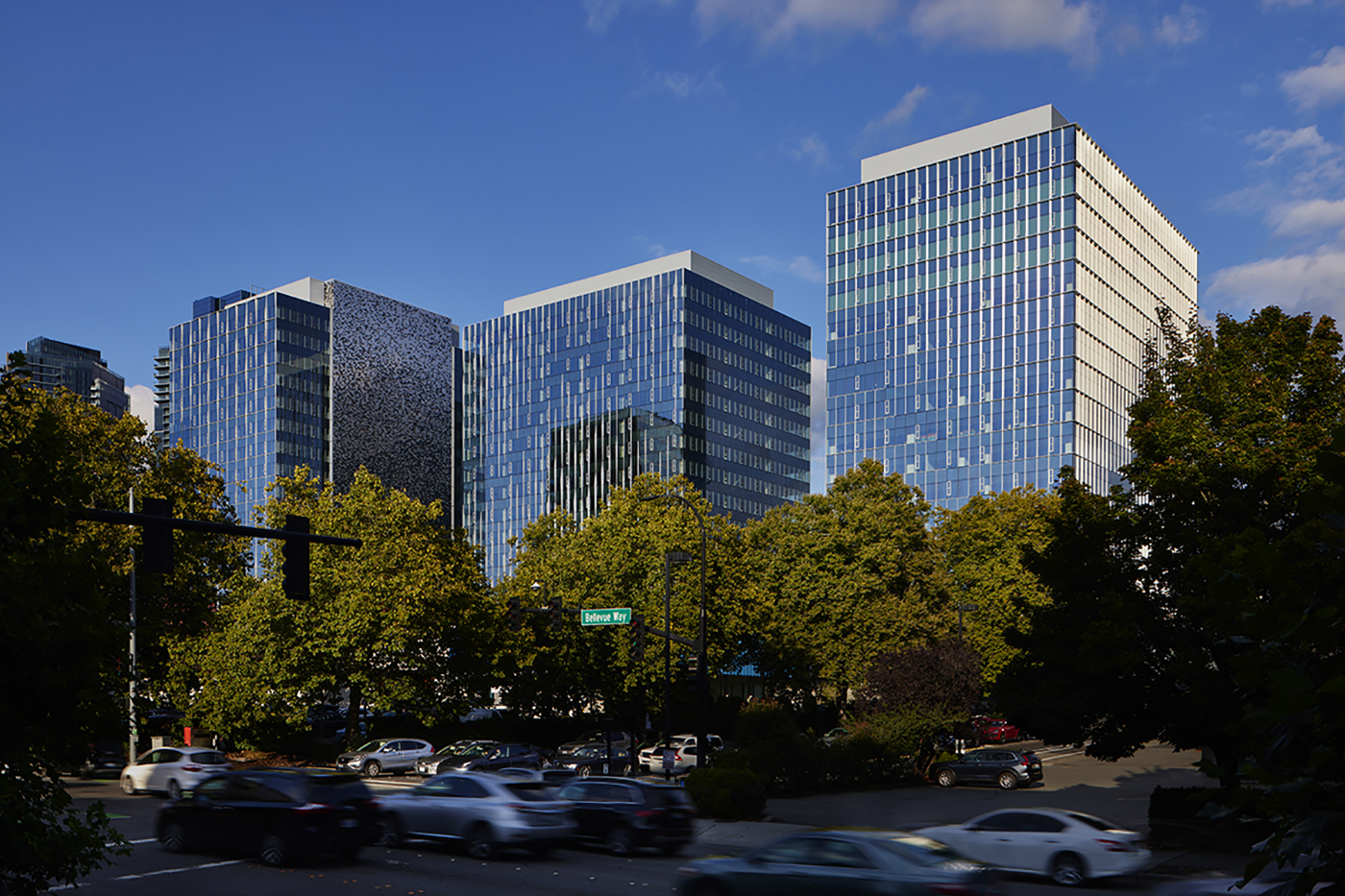
Taken together, these projects position Bellevue as the primary growth node for Amazon’s Puget Sound workforce, with long-term plans that could bring the Eastside employee count up to roughly 25,000. The company already occupies multiple buildings there and continues to invest in interior build-outs and long-term control of key sites.
If you zoom out, this isn’t just about square footage. It’s about strategy.
Why the shift east?
Part of this is practical. Hybrid work has forced nearly every major employer to reassess how much office space it really needs. When you’re right-sizing, you tend to prioritize the newest, most efficient buildings in the best transit locations. Many of Bellevue’s towers fit that description perfectly.
There’s also a political and business climate component. Bellevue has cultivated a reputation as business-friendly, with close proximity to other major tech players on the Eastside. For Amazon, concentrating growth in a cluster of purpose-built towers it controls offers flexibility and long-term stability.
Seattle, meanwhile, still holds a massive Amazon footprint. This isn’t an abandonment story. It’s more of a two-center model emerging in real time.
What this means for the region
For Seattle’s downtown office market, the challenge is diversification. The city has world-class urban bones and a deep talent pool, but it will need a broader mix of tenants to stabilize vacancy in the post-pandemic era.
For Bellevue, the upside is obvious. A denser skyline, more daytime population, and continued investment in transit and mixed-use development all reinforce its evolution into a true urban core rather than just a suburban edge city.
The risk, of course, is concentration. Bellevue now has to manage the same pressures Seattle once faced: housing affordability, traffic, and infrastructure strain when one employer becomes the gravitational center.
From a big-picture real estate perspective, what Amazon is doing makes sense. It’s consolidating older leased space, investing in newer assets, and creating optionality across two cities instead of tying its future to just one. For those of us who track office markets city by city, it’s a reminder that headquarters aren’t static anymore. They’re portfolios. And portfolios get re-balanced.


